IB - Primary Years Programme

Purpose

Teaching Methodology

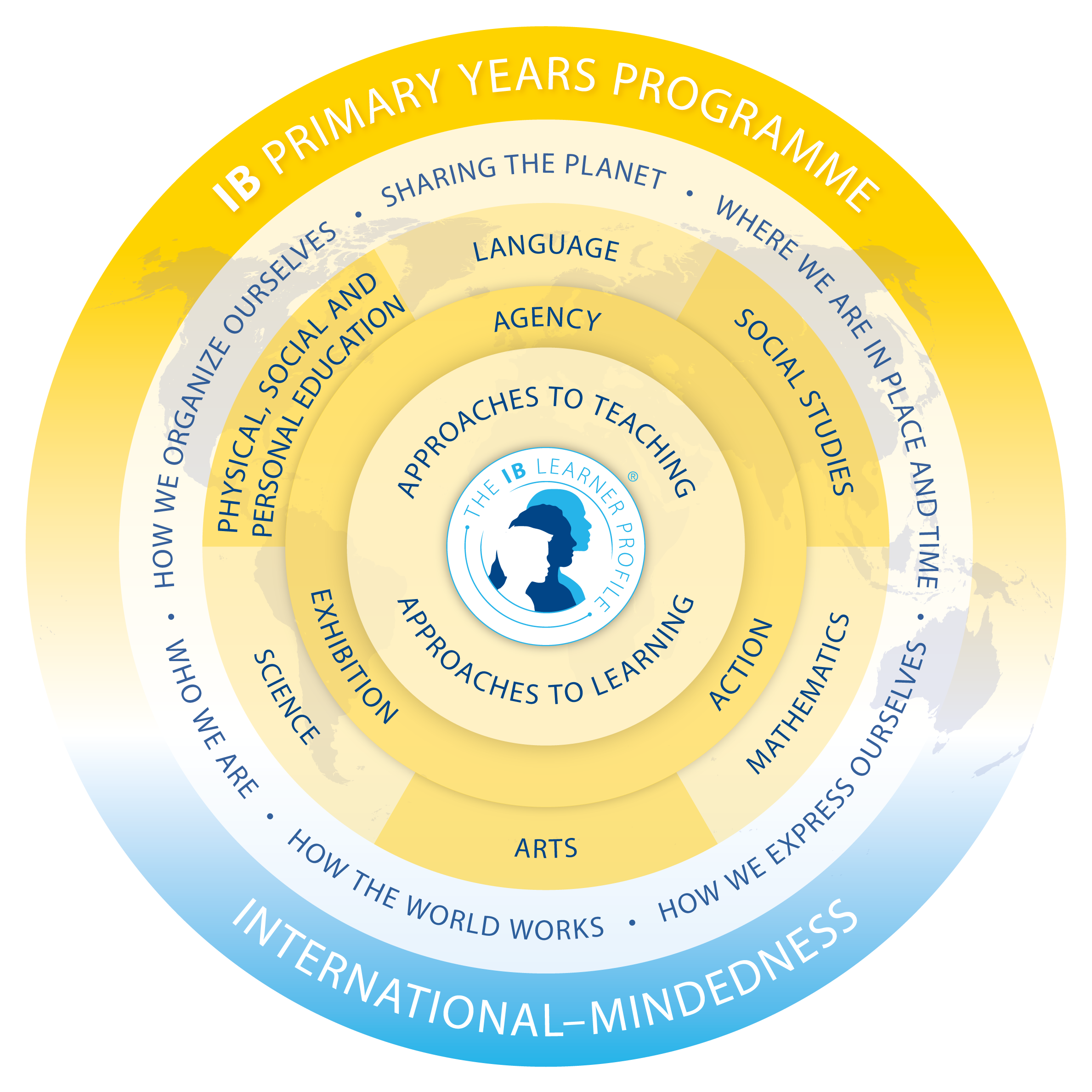
The IB Primary Years Programme (PYP) for children aged 3 – 12 nurtures and develops young students as caring, active participants in a lifelong journey of learning. Through its inquiry-led, transdisciplinary framework, the PYP challenges students to think for themselves and take responsibility for their learning as they explore local and global issues and opportunities in real-life contexts.

Education at Victorious Kidss Educares:
  • • The ‘Learning to love to learn’ philosophy majorly focuses on student-centred learning. Explores significant content, developing disciplinary and interdisciplinary understanding that revolves around local and global content
  • • Concept-based approach to teaching, learning and assessments
  • • Focus on building various life skills Communication, Critical thinking, Collaboration and Creativity, interpersonal relationships, communication skills, decision-making skills, self-awareness and problem-solving.
  • • Differentiated instructions to attain welling and excellence for learners across varied ability ranges and learning styles.


Environment

Student support:

The ATL (Approaches to Learning) exhibits the school’s commitment to promoting inquiry-based learning, critical thinking, and problem-solving skills, which are considered essential IB component

Skills had been catered to by IB for a long time. Formerly known by the International Baccalaureate Organisation as Transdisciplinary Skills, these are, simply put, a set of skills that we use when we are involved in learning.

Let us look into a few strong reasons that bring out the significance of ATL Skills:

Holistic Development

ATL skills encompass a wide range of skills, including communication, research, critical thinking, self-management, and social skills. These skills contribute to the holistic development of a child, ensuring that they not only excel academically but also become well-rounded individuals.

Lifelong Learning

ATL skills are not just applicable within the classroom; they are essential for lifelong learning and success in various aspects of life. By introducing these skills at an early age, we are equipping students with the tools they need to navigate challenges and opportunities throughout their lives.

Inquiry-Based Learning

PYP emphasizes inquiry-based learning, where students explore topics and concepts by asking questions and seeking answers. ATL skills, such as research and critical thinking, are fundamental for effective inquiry-based learning.

Transferable Skills

ATL skills are transferable across subjects and disciplines. These skills are not isolated but can be applied in various contexts. This prepares students for transdisciplinary learning, a key aspect of the PYP curriculum.

Seamless Transition to MYP and Beyond

The incorporation of ATL skills serves as a seamless bridge between the Primary Years Programme (PYP) and the Middle Years Programme (MYP). ATL skills are not limited to one phase of education; they are a foundational aspect of the International Baccalaureate (IB) curriculum. By nurturing these skills from an early age, we ensure that students are well-prepared for the challenges and expectations of the MYP and, ultimately, the Diploma Programme (DP) in their later years.

Future Academic Success

ATL skills are not just relevant within the PYP or MYP; they are skills that will continue to play a crucial role in a student's academic journey throughout their schooling. These skills are transferable and form the basis for success in higher education and professional life. By honing these skills early on, we are laying the foundation for a bright academic future.

Preparing for the Global Workforce

In an increasingly globalized and interconnected world, ATL skills are highly valued by universities and employers alike. They encompass skills such as communication, collaboration, and problem-solving, which are essential in the 21st-century workforce.

Building Independence

ATL skills encourage independence and self-directed learning. As students progress through their education, they will be expected to take more responsibility for their learning.

Real-World Relevance

ATL skills are not abstract; they are skills that children will use in real-life situations.

Primary School Principal: Ira Ghosh | EYP Coordinator: Desiree Dhami | Age: 3-11 years | PYP Coordinator: Leena Tripathi | PYP Curriculum Coordinator: Venicia Reneesh

The development of Approaches to Learning (ATL) skills is integral to our students’ holistic education at our school, woven into both curricular and co-curricular activities. As a fundamental aspect of an IB education, ATL skills complement the learner profile, knowledge, conceptual understanding, and inquiry. These skills are nurtured through implicit and explicit teaching methods, encompassing various activities such as unit-based projects, passion projects, genius hours, mini-exhibitions, and the PYP 5 Exhibition. The aim is to reinforce the core principles of the PYP and emphasize the real-world significance of ATL skills. In the contemporary world, where critical thinking and problem-solving are essential, the five categories of ATL skills provide learners with the tools needed for success not only within the context of a unit of inquiry but also in broader life experiences. Ultimately, the cultivation of ATL skills empowers students to become lifelong learners who not only acquire knowledge but also develop the ability to learn and achieve throughout their lives.

Action at VKE Empowering Learners to Make a Difference @ VKE

At VKE, we believe in nurturing students who not only excel academically but also actively contribute to their communities and the world at large. Our commitment to the principles of the International Baccalaureate Primary Years Programme is reflected in our approach to action, which is woven into every aspect of our curriculum and school culture.

At VKE, we understand that knowledge gained in the classroom must extend beyond its walls to have a meaningful impact. Through project-based learning, inquiry-based activities, and real-world problem-solving scenarios, our students develop a deep understanding of concepts while simultaneously learning how to apply them in practical situations.

We empower our students by fostering a sense of agency and responsibility for their learning and actions. Through student-led initiatives, such as our student council and service learning projects, students have the opportunity to voice their ideas, take ownership of projects, and see the tangible impact of their efforts. Whether it’s organizing a fundraising event for a charitable cause or advocating for sustainability practices within our school, students at VKE are encouraged to take initiative and lead with confidence.

We believe in nurturing more than just academic excellence; we strive to cultivate compassionate and empathetic individuals who are committed to making a positive difference in the world. Through our comprehensive social-emotional learning (SEL) curriculum, students develop empathy, respect, and a sense of responsibility towards others. From participating in community service projects to engaging in cross-cultural exchanges, our students learn firsthand the importance of understanding and caring for others, regardless of differences.

Community engagement is at the heart of the VKE experience. Through partnerships with local organizations, businesses, and universities, we provide our students with opportunities to connect with the wider community, learn from diverse perspectives, and contribute meaningfully to society. Whether it’s collaborating with local artists on a public art installation or partnering with scientists on environmental research projects, our students actively engage with the community, fostering mutual respect, understanding, and collaboration.

At VKE action is not just a concept—it’s a way of life. Through our holistic approach to education, we empower students to become lifelong learners, compassionate leaders, and active contributors to a better world. By integrating the principles of the IB PYP into our curriculum and school culture, we ensure that every student has the opportunity to realize their full potential and make a meaningful impact on the world around them.
Community plays a crucial role in building relationships with the wider community that are a source of wisdom and expertise to strengthen the implementation of its IB programme(s).

Learning IB Primary Years Programme (PYP) at VKE:

VKE is committed to inquiry-based learning. Six transdisciplinary themes provide the framework for the exploration and construction of knowledge. Teachers and students are guided by these transdisciplinary themes — as they design Units of Inquiry for exploration and study. Through this process, students develop an understanding of important concepts, acquire essential skills and knowledge, develop particular dispositions and learn to take socially responsible action.

The IB PYP comprises of six subject groups providing a broad and balanced curriculum.

Language Mathematics Science Social studies Arts – Visual Arts and Dance Jolly Phonics Personal, social and physical education

The most significant and distinctive feature of the IB Primary Years Programme is the six transdisciplinary themes. These themes provide IB world schools with the opportunity to incorporate local and global issues into the curriculum and effectively allow students to step up beyond the confines of learning within subject groups

Who we are

Inquiry into the nature of the self; beliefs and values; person, physical, mental, social and spiritual health; human relationships including families, friends, communities, and cultures; rights and responsibilities; what it means to be human

Where we are in place and time

Inquiry into orientation in place and time; personal histories; homes and journeys; the discoveries, explorations and migrations of humankind; the relationship between and the interconnectedness of individuals and civilizations, from local and global perspectives

How we express ourselves

Inquiry into the ways in which we discover and express ideas, feelings, nature, culture, beliefs and values; the ways in which we reflect on, extend and enjoy our creativity; our appreciation of the aesthetic

How the world works

Inquiry into the natural world and its laws, the interaction between the natural world (physical and biological) and human societies; how humans use their understanding of scientific principles; the impact of scientific and technological advances on society and on the environment

How we organize ourselves

Inquiry into the interconnectedness of human-made systems and communities; the structure and function of organizations; societal decision-making; economic activities and their impact on humankind and the environment

Sharing the planet

Inquiry into rights and responsibilities in the struggle to share finite resources with other people and other living things; communities and the relationship within and between them; access to equal opportunities; peace and conflict resolution.

The Exhibition

The Exhibition is an important part of the PYP for all students. In the final year of the programme, students undertake a collaborative, transdisciplinary inquiry process that involves them in identifying, investigating and offering solutions to real-life issues or problems. As the culminating experience of the PYP, the Exhibition offers students an exciting opportunity to demonstrate independence and responsibility for their learning.

ACADEMIC PROGRAMMES

Comprehensive Education from Birth to Adulthood